How To Identify Mold: Homeowners Guide to Maintaining a Healthy Indoor Environment

How To Identify Mold: Homeowners Guide to Maintaining a Healthy Indoor Environment


Major Topics of this Article Include

  • How To Identify Mold

  • What To Do If You Have Mold

  • What To Avoid With Mold

Homeowners Guide To Mold Safety

Maintaining a healthy indoor environment is essential for our well-being, and one significant aspect to consider is the presence of mold.

Mold can lead to various health issues and compromise the structural integrity of buildings. To ensure a mold-free environment, it is crucial to be able to identify its presence promptly. This essay will provide a comprehensive guide on:

  • how to identify mold
  • discussing visual cues
  • odor detection
  • signs of water damage
  • monitoring humidity levels
  • recognizing health symptoms
  • the importance of professional inspections
  • the use of DIY mold testing kits

Visual Inspection

Visual inspection is one of the primary methods to identify mold. Mold growth is often visible on surfaces, appearing as:

  • Discoloration
  • Spots
  • Fuzzy Growth

Check areas prone to moisture, such as:

  • Bathrooms
  • Kitchens
  • Basements
  • Areas affected by leaks or flooding

Look for black, green, brown, white, or gray spots on walls, ceilings, floors, windowsills, and other surfaces. Pay attention to areas with condensation or visible water damage. Keep in mind that mold can also grow behind walls or in hidden areas, so a thorough examination is necessary.

Musty Odor

Mold has a distinct musty odor that can be a helpful indicator of its presence. If you notice a persistent, earthy smell in a particular area, it could signify mold growth. This odor is often more noticeable in enclosed spaces or rooms with poor ventilation.

  • Be cautious of any area that emits a musty smell, especially if other visual signs of mold growth are not immediately apparent.

Water Damage

Mold thrives in areas with excessive moisture. Look for signs of water damage, as they often indicate a favorable environment for mold growth. Signs of water damage include:

  • Stains on walls or ceilings
  • Peeling paint or wallpaper
  • Warped surfaces
  • Separated baseboards
  • Mold Growth

Pay attention to areas near plumbing fixtures, windows, roofs, or areas that have experienced leaks or flooding in the past. These are prime locations for mold development.

Humidity and Condensation

High humidity levels contribute to mold growth. Regularly monitor the humidity in your home or office using a hygrometer. The ideal indoor humidity range is between 30% and 50%.

If  humidity is consistently above 60%, it creates an environment conducive to mold growth. High humidity can often be controlled by:

  • Using dehumidifiers
  • Improving ventilation
  • Repairing water leaks

Additionally, check for condensation on windows, pipes, or other cold surfaces, as it may indicate excessive moisture.

Allergic Reactions and Health Symptoms

Mold exposure can cause a range of health symptoms, particularly in individuals with allergies or respiratory sensitivities. Common symptoms include:

  • Sneezing
  • Coughing
  • Itchy Eyes
  • Nasal Congestion
  • Throat irritation
  • Worsened Asthma Symptoms

If you or others in your vicinity experience these symptoms that improve when away from a certain location, it could indicate mold exposure. However, it is essential to note that these symptoms can also be caused by other factors, so a proper medical diagnosis is recommended.

Professional Mold Inspections

If you suspect mold but are unable to locate it or need a thorough assessment, it is advisable to hire a professional mold inspector. These experts possess the necessary training, experience, and equipment to conduct a comprehensive inspection. 3 benefits to professional mold inspections are:

  1. They can identify the extent and type of mold present.
  2. Determine the root cause of moisture issues.
  3. Provide recommendations for remediation.

DIY Mold Testing Kits

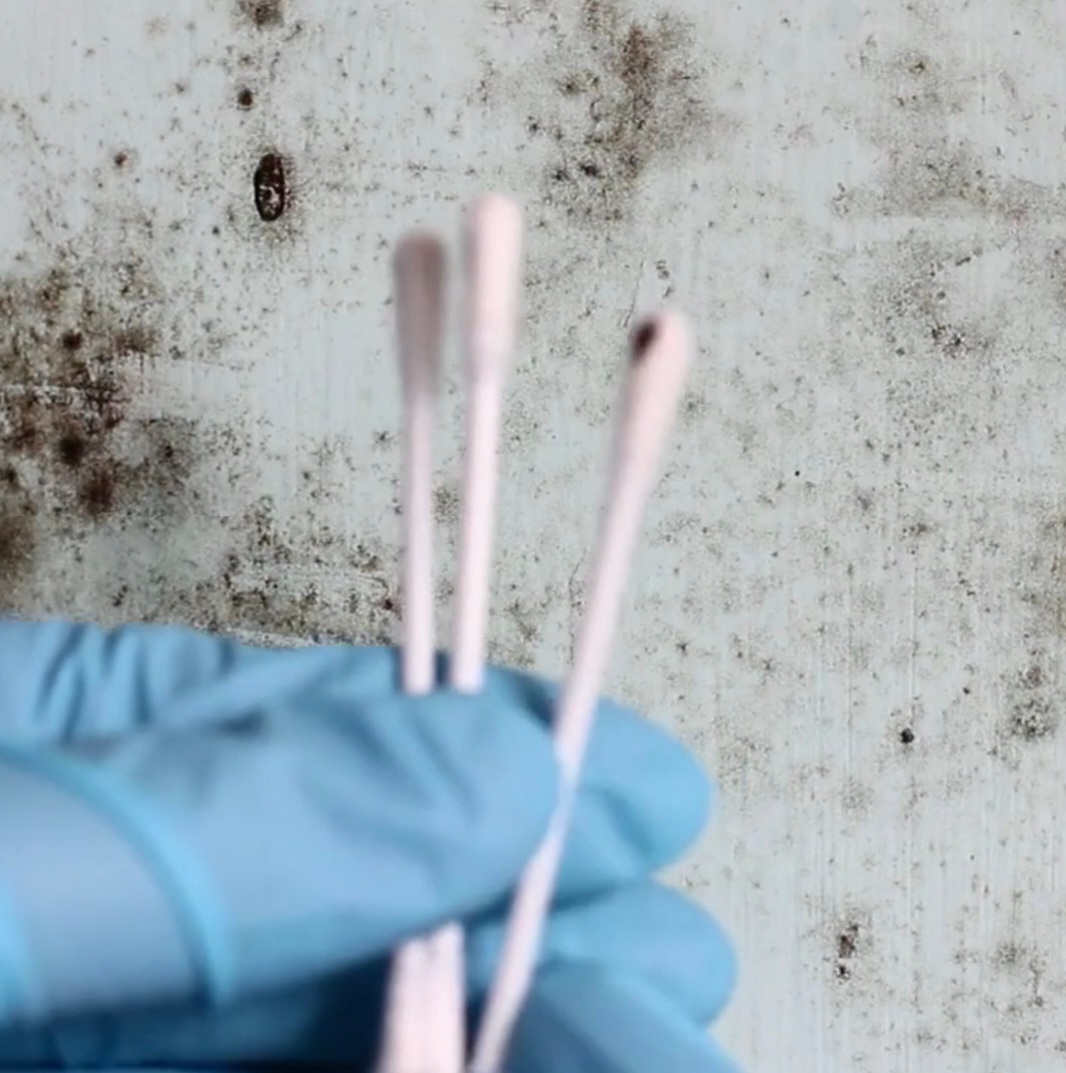
Mold testing kits are available for purchase and can help you collect samples for analysis. These kits often involve swabbing or collecting air samples from the suspected mold-infested area. However, keep in mind that DIY kits may not provide as accurate results as professional testing.

How To Identify Mold?

If you identify mold in your surroundings, it’s important to address the issue promptly. Depending on the extent of the mold growth, you may need to hire a professional mold remediation service to safely remove the mold and mitigate the underlying moisture or water issues that caused it. Mold can have various appearances depending on the type and stage of growth.

Here are some common characteristics and visual descriptions of mold:

COLOR: Mold can appear in different colors, including black, green, brown, white, gray, or even orange and pink. The color can vary based on the specific mold species and the surface it is growing on.

TEXTURE: Mold can have different textures, ranging from fuzzy and cotton-like to slimy and wet. The texture depends on the moisture level and the type of material the mold is growing on.

DISCOLORATION: Mold often causes discoloration on surfaces. You may notice patches, spots, or streaks that are darker or lighter than the surrounding area. Discoloration can be an indication of mold growth.

IRREGULAR GROWTH PATTERNS: Mold can spread in irregular patterns. It may appear as clusters of spots or form larger patches. The growth pattern may be asymmetrical or have a fuzzy, uneven edge.

SURFACE GROWTH: Mold can cause visible changes on the surface it is growing on. It may create a powdery appearance, leave stains, or cause deterioration of the material. Some molds can also produce a velvety or shiny appearance.

MOISTURE ACCUMLATION: Mold often thrives in areas with moisture or water damage. You may notice dampness, water stains, or a presence of excessive condensation in areas where mold is likely to grow.

It is important to note that mold can sometimes be difficult to visually identify, especially when it is growing behind walls, in hidden areas, or in small quantities. If you suspect mold but cannot visually confirm it, professional mold testing and inspection may be necessary for accurate identification. Additionally, the presence of a musty odor or any associated health symptoms can also be indicators of mold growth, even if it is not visually apparent.


What To Do If You Have Mold?

Step 1. Confirm the Presence of Mold

If you notice visual signs of mold growth, such as discoloration or patches, or detect a musty odor in a particular area, it’s likely that you have a mold problem. Confirm your suspicions by conducting a thorough inspection and, if necessary, consider professional mold testing for a more accurate assessment.

Step 2. Assess the Extent of the Issue

Determine the size and scope of the mold problem. Is it limited to a small area or does it appear widespread? Assessing the extent of the issue will help you determine whether you can handle the remediation yourself or if you need to seek professional assistance.

Step 3. Address the Source of Moisture

Mold requires moisture to grow and thrive. Identify and address the source of moisture that is promoting mold growth. This could include fixing plumbing leaks, repairing roof or window leaks, improving ventilation, or addressing condensation issues. Resolving the moisture problem is crucial to prevent further mold growth.

Step 4 Implement Safety Precautions

Mold can release spores that can be harmful when inhaled or come into contact with skin. Before you start the cleanup process, take appropriate safety precautions. Wear protective clothing (gloves, goggles, and a mask rated for mold), ventilate the area well, and consider isolating the affected area with plastic sheeting to prevent the spread of mold spores.

Step 5 Clean Up and Remove Mold

Small-scale mold problems can often be remediated by homeowners. Use appropriate cleaning solutions specifically designed for mold removal. Scrub the affected surfaces thoroughly, ensuring you remove all visible mold. Dispose of any contaminated materials properly. Be cautious not to disturb the mold and release spores into the air during the cleaning process.

Step 6 Consider Professional Remediation

If the mold problem is extensive, covering a large area, or if you have underlying health conditions, it’s best to seek professional mold remediation services. Professional remediation ensures a thorough and safe removal of mold, proper disposal of contaminated materials, and the implementation of preventive measures to prevent future mold growth.

Step 7 Prevent Future Mold Growth

After addressing the current mold problem, take preventive measures to avoid recurrence. This includes maintaining proper ventilation, controlling humidity levels, fixing any water leaks promptly, and regularly inspecting areas prone to moisture. Consider using mold-resistant paints or materials in areas susceptible to mold growth.

Step 8 Monitor and Maintain

Regularly monitor the previously affected area and other areas in your home or office for any signs of new mold growth. Promptly address any moisture issues or signs of mold to prevent a recurrence.

Remember, if you have concerns about your health or if the mold problem is extensive and difficult to handle, it is always advisable to consult with professionals who specialize in mold remediation to ensure a safe and effective resolution.

What Not To Do About Mold?

When you suspect the presence of mold in your home there are certain actions you should avoid to prevent further contamination and protect your health. Here are some things you should NOT do if you think you have mold:

1. Do Not Ignore the Problem

Ignoring the presence of mold or delaying its remediation can worsen the issue. Mold can spread rapidly and cause further damage to your property and potential health risks. Take immediate action to address the problem rather than ignoring it or hoping it will go away on its own.

2. Disturbing Mold Without Proper Precautions

Avoid disturbing mold growth without taking appropriate safety precautions. When mold is disturbed, it releases spores into the air, which can worsen the contamination and lead to respiratory issues. Do not touch or scrub the mold without wearing protective gear such as gloves, goggles, and a mask rated for mold.

3. Using Ineffective Cleaning Methods

Common household cleaning products may not be sufficient for mold removal. Do not rely solely on bleach or other conventional cleaners, as they may not effectively eliminate mold or prevent its regrowth. Instead, use specialized mold removal products specifically designed for this purpose or consult with professionals for appropriate remediation techniques.

4. Neglecting to Address the Source of Moisture

Mold thrives in damp environments. If you only focus on removing visible mold without addressing the underlying moisture problem, the mold is likely to return. Avoid neglecting the source of moisture, such as leaks, condensation, or humidity issues. Fixing the moisture problem is essential to prevent mold recurrence.

5. Attempting DIY Remediation for Extensive Mold Growth

While you can handle small-scale mold problems, extensive mold growth requires professional remediation. Trying to tackle a large mold infestation without the necessary expertise and equipment can be hazardous. Improper handling of a severe mold problem can lead to further contamination, spreading mold spores throughout the property.

6. Neglecting Safety Precautions

Mold can cause health issues, especially when disturbed or handled improperly. Avoid neglecting safety precautions. Always wear protective clothing, including gloves, goggles, and a mask rated for mold removal, to prevent direct contact with mold spores and inhalation of airborne particles.

7. Failing to Seek Professional Help when Necessary

If you have underlying health conditions, extensive mold growth, or if you are unsure about the severity of the problem, it is best to seek professional assistance. Professional mold remediation services have the expertise, experience, and equipment to handle complex situations safely and effectively.

Remember, mold remediation is a task that should be approached with caution and knowledge. When in doubt, consult with professionals who specialize in mold removal to ensure a thorough and safe resolution of the problem.


7 + 1 =

How Plumbing Leaks cause Water Damage and Mold

How Plumbing Leaks cause Water Damage and Mold


Facts About Plumbing Leaks and Mold

  • A plumbing leak will cause mold

  • Structural Drying is needed for most plumbing leaks

  • Plumbing CAN be covered by insurance

How plumbing leaks cause water damage and mold?

Homeowners know that a small leak does not automatically equate to water damage, but homeowners are not so clear on how long it takes for a small leak to grow into mold or water damage problem.

A water leak can cause mold growth in as little as 24 hours. Likewise, it may also take a homeowner years to discover mold contamination.

  • Time and Germ levels are the major variables of how plumbing leaks cause water damage and mold.

3 Facts plumbers should know about mold:

  1. Where there is a leak there is mold.
  2. There is microscopic, so if you can see if, there is a problem.
  3. Mold growth indicates water damage and the need for mitigation.

Homeowner Tip #1

Prevent the need to kill mold by keeping your home clean and dry. Routine cleaning and maintenance are the best ways to keep your home or office mold free. Maintaining free air flow circulation is the next major recommendation. Air flow prevents mold from settling to grow. A clean, dry, well-ventilated room is least likely to grow mold.

How often do plumbers find mold or water damage?

Less than 15% of plumbing service calls are in response to water damage or flood in progress. On the other hand, over 90% of water damage and mold is plumbing related.

Structural drying and the application of antimicrobial should be standard with any leak service plumbing invoice. Uneducated plumbers fail to make these recommendations mold as standard mold prevention, costing their customers thousands of dollars within two years.

  • Bathroom Vanity Mold Prevention Structural Drying = $500

  • Bathroom Mold Remediation = $2500

Signs of Mold Growth

Only the best plumbers will be committed to educating themselves on how mold remediation and water damage go hand in hand.

The more a plumber understands about water damage and mold, the more value a plumber can provide to their customers.

Plumbers should always be on the lookout for mold because whenever there is a leak mold will grow.

This is why Mold Metrix seeks to work with and educate plumbers. Together, plumbers and water damage mitigation professionals can effectively prevent mold growth and save customers money.

  • Odors

  • High Humidity

  • High Moisture Levels

  • Poor Air Circulation

Should plumbers inspect for mold?

Plumbers do not inspect for mold. When you call a plumber, their primary focus is:

1.Finding a plumbing leak

2. Repairing a plumbing leak

Plumbing leak detection is the professional service required when filing a water damage mitigation claim. A proper plumbers’ report will define the source of a water leak.

If a leak happens suddenly or accidentally, there is a 50% chance that the plumbers’ invoice can be reimbursed by insurance.

Plumbers do not bill insurance companies as standard operating procedure. Therefore, most customers and plumbers alike do not know how get to plumbing covered by homeowners’ insurance.

Plumbers Serving Northern Virginia

Fortunately, Mold Metrix works with some of the best plumbers in Northern Virginia. Smooth Plumbing is one of our preferred plumbing partners. The owner is a licensed master plumber in the state of Virginia and provides a one stop shop for mitigation plumbing services. We highly recommend Smooth plumbing for your plumbing needs located.

Smooth Plumbing strives to bring value to their customers, not only with excellent plumbing service, but by going above and beyond by educating their plumbing staff about mold and water damage.


This reflects the Mold Metrix mission which is to move our customer from stress to satisfaction.

  • We believe that when a customer knows more about their mold mitigation and plumbing issues, they can better deal with the natural stress of these projects.

Are plumbers liable for spreading mold contamination?

Many times, homeowners have remodeling plans and at some point in the process they discover mold. One example is replacing cabinets. Removing old cabinets is highly likely to uncover hidden mold growth. This is what happened with a plumbing partner who was called out for a kitchen remodel in Alexandria.

Any Contractor Can Be Held Liable For Mold Cross Contamination

The previous homeowner had several leaks that caused significant water damage, now there was visible mold growth. Smooth Plumbing was able to recognize that mold was growing downstairs on the overhead joist system. Mold Metrix later discovered mold growth behind the kitchen walls and under the vinyl floors.


Most common areas plumbers discover mold:

  • Kitchens
  • Bathrooms
  • Laundry Rooms
  • Unfinished Ceilings with Plumbing and Water Lines

Plumbing and Mold Safety

When a plumber is able to recognize mold and water damage they become more valuable to their customer. Customer become eligible to receive a FREE onsite mold and water damage inspection when referred by a plumber in the Metrix Connection.

Onsite estimates for mold removal are not free; however, when our plumbing partners refer mold jobs customers win. Whenever mold is involved, safety must come first. Working with the plumber allows us to safely coordinate all aspects of a mold removal or water mitigation project. Having a clearly defined remediation protocol is the first step:

  • Proper

  • Preparation

  • Prevents

  • Poor

  • Performance

If your or someone you know has a plumbing leak and is in need of mold removal choose Metrix over the Matter, because the Power to Change the Matter is in the Metrix.


How To Kill Mold

How To Kill Mold


Facts About How To Kill Mold

  • Homeowners should not attempt “do it yourself” mold removal.

  • Mold must be removed, not killed.

  • Mold Growth is a sign of water damage.

  • Mold Removal includes “dry outs” and repairs.

  • Mold Removal can be covered by Homeowners Insurance.

  • Blech and water should not be used to “kill” mold.

How To Kill Mold

The proper way to kill mold is to remove it completely from all affected areas and unsalvable materials. There are some cases where mold can be “killed,” but even these projects include the remediation process.

Step 1. Remove all non-salvageable materials.

Step 2. Preclean effected areas to remove most of the mold contamination.

Step 3. Perform aggressive detailed cleaning.

Step 4. Exfoliate salvageable materials.

Step 5. Perform second detailed cleaning.

Step 6. Apply anti-microbial.

Step 7. Begin structural drying.

Mold Removal Scams

Homeowners are advised to be on the lookout for companies and contractors who advertise mold killing treatments. The following are 4 major red flags of a scamming mold contractor.

1. No IICRC Certification

A mold contractor without proper IICRC certifications is the first major red flag to consider. Some states require no license for mold removal and remediation. Therefore, any cleaning company can offer mold cleanup and removal services. Mold remediation projects should be supervised by an IICRC certified professional. Furthermore, the supervisor should have the ARMT, applied remediation mold technician certification.

2. Fogging To Kill Mold Is A Scam

Some companies mislead homeowners into thinking they can “fog to kill mold” the way one would fog for roaches. Fogging with a mold inhibitor without removing moldy materials is a major violation of standard.

3. No Moldy Materials Removed

What is mold remediation without demo? Beware of any contractor offering to clean the visible mold, spray everything down. Mold growth indicates water damage. Without properly addressing the water damage issue, a mold removal project cannot be successful.

Homeowner Tip #1

Prevent the need to kill mold by keeping your home clean and dry. Routine cleaning and maintenance are the best ways to keep your home or office mold free. Maintaining free air flow circulation is the next major recommendation. Air flow prevents mold from settling to grow. A clean, dry, well-ventilated room is least likely to grow mold.

Eliminate Mold At The Source

The only way to kill mold is to eliminate it the source.  One hundred percent of the time, mold growth is the result of a plumbing leak or water damage. Mold cannot survive without a water source; this includes high humidity.

Good air circulation is not possible without removing all mold contaminated contents and materials. Effected materials must be removed to prevent the spread and cross contamination of mold. Structural drying is vital to a successful mold remediation and cannot begin until mold contamination has been reduced by 80% or more.

The best way to kill mold to is prevent it from growing.

To recap, when a customer asks “how to kill mold” the correct answer is that we must eliminate it at the source. The objective of mold remediation is not to kill the mold, it is to remove mold from the affected living area. Only after we have removed all mold can structural materials and salvageable items be remediated.

Aggressive Cleaning And Mold Remediation

The IICRC S520 is the mold removal industry standard. This standard requires that all mold removal projects employ an aggressive cleaning method for mold decontamination. Aggressive cleaning includes, but is not limited to, hand powered scrubbing, metal brushing, sanding and sand blasting.

HEPA Extraction And Mold Removal

High-efficiency particulate absorbing vacuums are used to perform detailed cleaning for mold removal projects. After wall cavities and joist systems have been exfoliated, they are then HEPA vacuumed. This process helps to remove mold trapped under the surface of structural materials.

Apply Anti-Mold Agent

Applying the anti-mold agent is the last phase of a mold remediation project. This is what people commonly refer to as “killing the mold.” Anti-microbial de-activates mold spores, while structural drying removing excess water to prevent future mold growth from occurring.

Is Mold Hard To Kill?

1st Remove Moldy Drywall

There is no easy way to kill mold. Mold remediation is a very laborious job. Mold removal projects often include a phase of demolition. During the demolition phase effected drywall is the first finishing material to be removed. Removing wet drywall helps to reduce room humidity and stabilize indoor environments.

2nd Remove Unsalvable Carpet

Demolition is by far the most difficult part of the mold removal process. After the effected drywall has been removed, next up is the carpet and pad. Eliminating unsalvable carpet reduces humidity and improves odors.

3rd Clean and Decontaminate

Mold decontamination cannot begin until the effected materials have been removed. This is when the aggressive cleaning method, HEPA vacuuming, and application of anti-microbial are employed.

4th Structural Drying

Mold remediation is concluded with structural drying. This involves the use of dehumidifiers, air movers, air injectors and heaters.

If you or someone you know is in need of mold removal, choose Metrix over the Matter, because the Power to Change the Matter is in the Metrix.

What Homeowners Should Know About Mold Inspections

What Homeowners Should Know About Mold Inspections


Major Topics of this Article Include

  • Mold Inspection Standards

  • Purpose of a Mold Inspection

  • Types of Mold Inspections

  • Mold Testing

  • Cost of Mold Inspections

Mold Inspection Standards are based on industry standards defined by The Institute of Inspection Cleaning and Restoration Certification.

Additionally, there are at least 5 additional standards used in co-relation to the IICRC standard:

Mold Inspection Restrictions

The results of mold inspections are representative of conditions existing at the exact time and location of where samples were taken only. Therefore, inspectors can not rely on mold inspection reports to represent conditions at any other location or date.

Testing may be required for asbestos, lead paint, and other environmental hazards prior to remediation. The presence of such materials take precedence over mold remediation. Removing regulated materials must be conducted in accordance with federal, state, provincial, local laws, regulations and specific remediation protocols.

The Goal of a Mold Inspection

Unlike a free mold estimate, a mold inspection cannot be conducted virtually and must be conducted onsite. Mold inspections include testing with analysis and a complete report. Reports include, but are not limited to mold damage documentation and remediation cost projections. Service fees include inspection and per sample charges. 

Invasive inspections are more expensive than non-invasive inspections, while fees vary and start at $250. The average mold inspection requires 2-5 samples priced at $50 each. Invasive mold inspections include spaces such as attics and crawlspaces, opening walls, removing baseboards, inspecting HVAC Systems and other hard to reach areas. 


Mold Inspections Are Not Free

Video conferencing allows us to provide immediate insight to our customers about their mold removal projects. Subsequently, customers should expect to receive an initial mold estimate via video chat. As a result, contractors and customers save both time and money by connecting first via video chat. This helps businesses keep costs low, allowing customers to save more money.

Mold Inspections and Testing Disclaimer

1. Do not depend on your mold inspector for any medical advice.

Providing medical advise with regards to personal health concerns about mold contamination is the job of a medical specialist, not the mold inspector.

2. If symptoms such as allergy or asthma are experienced, mold inspection is often the most logical starting point.

However, airborne particles originating from biological sources can result in symptoms or illness as well. 

3. Mold inspection is not intended to report on what the inspector considers to be typical levels of mold.

A mold test is not an environmental investigation for any other condition. Further testing is required for dust mite, roach, pet allergens, virus, bacteria, lead-based paint, asbestos, radon, or any other environmental conditions.

4. Mold Metrix does not offer an opinion as to the advisability of the purchase or sale of property.

Furthermore, Mold Metrix is not responsible for the non-discovery of any water damage or mold contamination for which Metrix has not been contracted to inspect. Likewise, this is also true for any other problems undetected because sampling was not requested and paid for.

INTERIOR MOLD INSPECTION

No destructive or disruptive testing will be performed unless contracted by a client. An inspector will not check any area that poses a safety threat to the inspector such as walking on roofs. Likewise, attics and crawl spaces with low clearance may not be entered.

Correspondingly, customers should understand that inspections can only report on problems present at the time of testing. Inspectors cannot report on areas or locations in the building that have not been specifically inspected and tested.

AIR QUALITY MOLD INSPECTION

Samples of non-active spores only allow for spore identification to the genus and not the species level. Therefore, comparison of levels to similar types of indoor and outdoor spore types is not exact. This is especially true for some small, round spores, such as aspergillus and penicillium spores.

Active spore sampling only allows for identification and categorization of molds that germinated from live spores. Consequently, many dead yet still allergenic spores may be missed in the lab results when using this methodology, resulting in low estimations of the number of actual spores present.

INVASIVE MOLD INSPECTION

Inspectors cannot guarantee mold growing within a wall cavity can be found. Hidden mold may not be producing large numbers of spores during sampling. Also, mold may not have access to the spore trap due to insulation or other blockades.

Mold Remediation: Why is mold growing on my Kitchen Cabinets?

Mold Remediation: Why is mold growing on my Kitchen Cabinets?

“I think we need Mold Remediation for our Kitchen Cabinets”

If you or someone you know is in need of mold remediation or has water damage, do not hesitate to choose Metrix Over The Matter Because The Power To Change The Matter Is In The Metrix.  Always feel free to call 833-200-9444 or visit us online at www.floodmetrix.com/mold-removal

This is the story of a homeowner who just wanted to get some new cabinets for his wife.  One day I received a call from a homeowner requesting an estimate for mold remediation. We scheduled service for an on-site mold remediation estimate for the customer.  The mold inspection fee would later be credited towards any mold remediation the homeowner chose to contract Mold Metrix to provide.

Arriving to inspect the damage, I was able to get familiar with how to best cater to these homeowners. He and wife explained that the “cabinet company” from whom they’re buying their new cabinets, was prepared to tear out the moldy cabinets and install the new purchase.  However, the husband was wise and decided to get a professional opinion about the mold.  I would have opted for a second opinion as well if the “cabinet company” told me that “if there was some mold they would be able to take care of it” and that I as the homeowner “wouldn’t have to worry about it”.  This from any person speaking outside of their accredited expertise is a red flag.

If you need Mold Remediation choose Metrix over the Matter

mold growth on kitchen cabinets and drawers

“There was visible mold growing on the cabinets attached to the corner of the kitchen”

I asked the customer if there had been any type of water damage or leak they were aware of?  To the homeowners’ recollection, there had only been some leaks under the sink.  However, this would not explain the mold remediation needed for the corner kitchen cabinets.

Based on customer’s account, I continued to investigate until I discovered that there was a water heater located directly behind the moldy kitchen cabinet.  In the water heater room, I could see many visible signs of water damage.  The vinyl directly under the water heater was damaged.  There was visible mold on the drywall behind the water heater and so based on my initial inspection, I knew there must have been a water damage that was not properly handled at some time in the past. In addition to the sink having a leak, that was apparently causing mold growth in the kitchen and the need for mold remediation.

“I explained to the homeowners that it would be ideal to schedule the mold remediation in conjunction with a plumber to minimize the time spent without water in the home.” 

The customer agrees and I write up an estimate after consulting with a plumber in our network for approximately $4100 which included mold remediation, repairs and plumbing necessary for the project.  Here is where it started to get complicated.  On day one of the project the customer mentions seeing a leak in the corner.  I took note of this and proceed to set up containment for mold remediation in the kitchen.  The plumbers are on-site, and they are detaching the leaky water heater in preparation for mold removal.  As we begin to dismantle the granite countertops, we remove the backsplash and behind the backsplash there’s mold.  This is mold approximately 4 feet up the wall and my initial estimate was two feet, tops.

I called the customer, and I informed the customer and inform him that mold growing halfway up the wall, and this need to increase the amount of mold removal necessary to properly remediate per IICRC S520 will increase your bill from $4000 to more like $6000, and this is out of pocket discount.  The customer agrees and gives the go ahead to continue with the work.  The plumber takes apart all the plumbing in the kitchen, so the sink is no longer capable of leaking, they cap off the plumbing and we remove the granite countertops.  The further we get into this mold remediation, the worst it got.  When we removed those countertops, it became so evident why they had made the right decision by choosing a certified professional mold remediation contractor to take care of this problem in the kitchen.

Mold was growing all the way up the wall in the corner and the cabinets were completely affected. They came off the wall like wet cardboard.  If the cabinet company had just come in as a routine installation, they would have run into such a problem that they were not prepared to deal with. It would have been a disaster for the homeowners if they had not chosen Metrix Over The Matter.

We continue with the mold remediation, but we only go up halfway up the wall. I told the plumber that even though the initial plan was to remove and reinstall the water heater in the same day, we couldn’t do it, because the subfloor underneath the water heater so severely damaged.  It was my call to pause the project until the homeowner had a chance to make a decision.  I just didn’t want to chance installing the water heater back on that water rotted subfloor and the customer ultimately agreed with me.

Insurance Accepted, financing Available

They saw water leaking from the cabinets in the corner?

We had to remove the water damaged subfloor and that area is where we discovered the key to our water damage claim.  So let me back up, initially the customer reported seeing water coming up from the corner cabinets.  Taking note of this, I assumed the water appearing was the result of “pooled” water trapped under the floating floor was occasionally escaping.  The floor was damaged, so it made sense that water would sometimes came up to the top.  After having removed the wet damaged floor, the cabinets and the drywall, there was still no leak apparent.  This meant there was no way for the customer to get this mold remediation covered by his insurance.  Until we cut out the subfloor and we were able to discover that there was a pipe actively leaking.

Its only cost $72 to fix the pipe, but this $72 pipe caused over $9000 worth of mold and water damage.  Now that we discovered the pipe, I was very excited because now the customer no longer had to pay out of pocket.  He could report this active water damage to his insurance which was the Hartford.

Mold is Water Damage and Water Damage is Covered by Homeowners’ Insurance

On the very same day that the customer reached out to the Hartford Insurance, they got in contact with me.  I had a conversation with a well-educated adjuster, and they approved to cover the water damage mitigation, with the understanding that the mold damage cleanup would not be able to be included.  Such mold removal line items as, sanding studs and applying anti-microbial are examples of what could not be included.  However, by having the homeowner’s insurance step in, all of the plumbing was able to be covered for this water damage which, ordinarily, insurance does not cover.  Therefore, the plumbing invoice is generally billed separately.

Also, the adjuster agreed to pay for the removal of the wet moldy cabinets, the removal of wet effected drywall up to four feet high, along with the affected kitchen floor, along with the structural drying.  Removal of the subfloor and replacement of the subfloor; detaching and reattaching the water heater, the new water heater pan, reinstalling all the plumbing in the kitchen such as the dishwasher, sink and the garbage disposal.  Insurance played a tremendous role in helping this customer save on his out-of-pocket expenses.  Not to mention that he gets a new floor included in the claim; also, insurance is now responsible for replacing the lower kitchen cabinets and the countertops.

In closing, sometimes you have the need for mold remediation, and you have to pay out of pocket, but sometimes, like in this case, you’re able to get it covered by insurance.  It is always best to have mold inspected by a certified industry professional.  Mold contamination is not always what it seems. Sometimes it seems like it’s not very bad, but it turns out that the entire wall is in fact affected, but from the looks of things everything seems to be in order.  In any case Mold Metrix is here to help you and those you care about.

Mold Removal And Remediation Standards

Mold Removal And Remediation Standards

Mold Removal Standards 2023

Responsible homeowners have questions whenever they discover mold for different reasons most commonly the concern revolves around health in general.  Homeowners understand that mold remediation is a important maintenance issue and should be addressed by a competent mold remediation professional. Homeowners also need to know who they can trust whenever such a problem arises in their home. Homeowners like to do research to find out which companies have information to help educate their customers.

At Mold Metrix we believe this is important because many states do not regulate mold remediation or mold removal projects.  States such as New York, Florida and Texas provide valuable guidance to the mold remediation industry with regards to practicing standards and each of these states rely on the ICRC S 500 water damage restoration and S520 mold remediation standards in addition to their respective mold decontamination statutes.

IICRC S500 and S520 Mold Remediation Standard

The IICRC has played a central role in the cleaning and restoration industry for many years by providing industry standards and best practices. The IICRC’s course on water damage is the industry standard for training on water damage mitigation.  After the famous Ballard mold lawsuit was decided, the IICRC decided that a working standard should be created for mold remediation. The standard produced by the IICRC for mold remediation is known as the IICRCS 520 standard and reference guide for mold remediation. Rather than focusing on visible contamination, the S500 focuses on the extent of mold contamination.

The ICRC S 520 defines a mold remediation project in terms of the following three conditions:

Condition 1: a normal living environment. This is the normal living environment that one would expect in a home, office or commercial building.

Condition 2: an indoor environment that is contaminated with settled mold spores and fragments. Condition 2 areas are located directly near or adjacent to a room with active mold growth.

Condition 3: an indoor environment contaminated with visible or active mold growth.

S520 Mold Removal Approach

From its introduction the IICRCS 520 approach has moved the mold remediation industry forward. to better understand the mold remediation standards there is certain terminology which must be defined.

In the S 520, the term “should” means that the practice or procedure is the accepted standard of care, and should be followed, but is not mandatory.

the term “shall” means the practice or procedure is mandatory due to laws or regulations. This use of shell comes from the legal terms used in the writing of laws and regulations.

The term “recommended” means that the practice or procedure is advised or suggested, again not mandatory.

The term “limitations” refers to restrictions that are placed upon the remediator that result in a limit on the scope or on remediation activities.

The term “complexities” means situations that cause the mold remediation job to become more difficult or detailed, but that the work can still be performed adequately.

The term “complications” means situations that may arise after the start of a mold remediation project which may change the scope of work.

mold remediation

Category 3 Water and Mold Remediation

Category three water is almost certain to cause mold growth. The IICRC S 520 mold remediation standard defines category three water as grossly unsanitary contaminated and containing parthenogenic taxonomy genic or other harmful agents. Category three water is any water that enters a home from beyond a sewer trap. Other examples of category 3 water include all water entering from outside the dwelling, ground water, river water, and or fish tank water.

When reporting water damage and mold remediation to your insurance company the proper way to create a claim is as a category three water damage. Category 3 water damage includes toxigenic or other harmful agents including, but not limited to gas, lead, asbestos, animal droppings and mold.


Unsalvageable Mold Category

A category three water loss will create a condition 3 mold environment in as little as 72 hours and sometimes faster than that depending on the contamination levels of the water. Moldy materials are generally classified as either salvageable or unsalvageable. Organic based materials are able support mold growth very easily are typically classified as unsalvageable due to mold growth and or contamination. Examples include books, papers, carpet padding, baseboards, drywall, vinyl plank, and wood flooring.

Salvageable Mold Category

Not all organic material is automatically classified as unsalvageable. For example; studs, floorboards, and joist systems are all structural components made of organic material. However, these materials are structural and are usually salvaged unless they have decomposed to the point where they are structurally sound.  Contents are defined as the personal property held within the dwelling or office.  Contents restoration is a separate, but related claim for mold contamination.  Concerns related to salvageability and cost should be discussed with the mold remediation manager.

Insurance Accepted, financing Available

Personal Protective Equipment

Any project classified as a mold remediation project or classified as a category 3 water damage should be expected to use protective gear including, but not limited to rubber gloves, rubber boots, a Tyvek suit, mask and or respirator. In some cases a self-contained breathing apparatus may be necessary due to the level of mold contamination. Additional protective equipment may include lighting and lighting setup. Additional fees may be incurred for projects located in attics and crawlspaces.

Containment Standards For Mold Removal

Mold remediation projects with less than 10 square feet of mold do not require additional containment measures beyond HEPA air filtration.  Containment on a mold remediation project can be as simple as closing a room door and covering it with a containment plastic and zipper. In other cases, full scale containment is necessary. Any questions or concerns you may have about containment and your mold remediation project should be discussed with your project manager. They should be able to explain All decided courses of action as well as how they have applied the IICRC S 500 standard.

Air Filtration For Mold Remediation

Inhaling mold is one of the easiest ways to become affected by it. This is why mold remediation professionals must also include HEPA air filtration add negative air systems on all mold remediation projects. In this way we can improve and preserve the integrity of the indoor air quality.

Mold Remediation Cleaning Standards

The IICRC S520 mold remediation standard is to remove all affected materials and to remediate mold contamination. What this translates to is the safe removal of affected materials, including cutting out and bagging materials for removal. Mold remediation does not mean zero mold present. The goal of mold remediation is to restore mold levels to within safe acceptable levels.

If you or anybody you know needs mold remediation, Choose Metrix Over The Matter, because the Power to Change the Matter is in the Metrix.

Call Now Button